


Regional Conservation Partnership Program - Ohio
Ohio Priorities
- Water Quality Degradation
- Soil Quality Degradation
- Soil Erosion
How to Apply to RCPP
NRCS accepts applications for RCPP on a continuous basis. We announce signup cutoff deadlines as funds become available. For Fiscal Year 2023, the first application cutoff date for new RCPP contracts is to be announced.
Ohio RCPP Funding Available to Producers
- Ohio FY25 RCPP Program Ranking Criteria
- FY23 Program Payment Schedule
Tri-State Western Lake Erie Basin Collaboration RCPP: Indiana, Michigan and Ohio have joined forces with over 30 partners, including the Ohio Department of Natural Resources, Ohio Farm Bureau, and the Ohio State University to help participating farmers improve soil health and reduce nutrient loading impacts in the Western Lake Erie Basin. The partnership will use sophisticated targeting tools to work with producers and landowners operating near the Maumee headwaters, an area identified as a source of high levels of excess phosphorus, with technical and financial assistance opportunities.
- Next Submission Deadline: January 31, 2025
-
Ohio RCPP TriState WLEB Practice LIst (56.43 KB)
-
TriState WLEB Project Map (2.26 MB)
Rocky Fork RCPP: Highland Soil and Water Conservation District and five local state and federal partners will work with producers and landowners to protect water quality, reduce soil erosion, and provide habitat for at-risk species in the Rocky Fork Watershed. The partnership will help producers implement cover crops, field borders, and filter strips to reduce soil erosion and nutrient runoff, helping alleviate algal blooms in Rocky Fork Lake
- Next Submission Deadline: January 31, 2025
-
FY24 Rocky Fork RCPP Practice List (45.42 KB)
-
FY24 Rocky Fork RCPP Map (1.05 MB)
H2Ohio Expansion RCPP: The Ohio Department of Agriculture will use RCPP funding to complement its H2Ohio initiative, launched in 2019. The initiative focuses land management practice and system implementation to reduce Lake Erie nutrient enrichment. A diverse group of 20 partners intend to focus this project on farms and farmers in a 10-county portion of the Western Lake Erie Basin (WLEB) not currently included in the H2Ohio program, thereby accelerating progress toward achieving Ohio's commitment to the Great Lakes Water Quality Agreement.
- Next Submission Deadline: n/a
-
FY24 H2Ohio Extension RCPP Practice List (47.78 KB)
-
FY 24 H2Ohio RCPP Map (1.24 MB)
Active RCPP Projects
Ohio RCPP Projects - Selected 2022
Project: Financing Climate Smart Agriculture in Ohio's Miami Valley
Lead Partner: one.two.five Benefit Corporation
NRCS Funding Amount: $2,900,000
Targeting an urban and rural network of BIPOC farmers as well as non-BIPOC farmers, the Financing Climate Smart Agriculture project will spur the adoption of NRCS-based conservation practices and systems designed to enhance soil quality and soil carbon storage. This project will advance the most pressing issues for climate smart agriculture, including soil carbon capture and retention by establishing a pay-for -performance compensation approach for farmers who adopt climate-smart agriculture practices and systems. The project area encompasses a diverse landscape of urban and rural and small and large farms and is home to over 1 million inhabitants, 5,000 farms and 8,000 producers spread across six counties.
Ohio RCPP Projects - Selected 2021
Project: H2Ohio Western Lake Erie Basin
Lead Partner: Ohio Department of Agriculture
NRCS Funding Amount: $8,000,000
The Ohio Department of Agriculture will use RCPP funding to complement its H2Ohio initiative, launched in 2019. The initiative focuses land management practice and system implementation to reduce Lake Erie nutrient enrichment. A diverse group of 20 partners intend to focus this project on farms and farmers in a 10-county portion of the Western Lake Erie Basin (WLEB) not currently included in the H2Ohio program, thereby accelerating progress toward achieving Ohio's commitment to the Great Lakes Water Quality Agreement.
Project: Tri-State Western Lake Erie Basin - Collaboration
Lead Partner: Indiana State Department of Agriculture
NRCS Funding Amount: $8,000,000
Indiana, Michigan, Ohio Department of Natural Resources and Ohio State University will join forces with over 30 partners to help participating farmers improve soil health and reduce nutrient loading impacts in the Western Lake Erie Basin. The partnership will use sophisticated targeting tools to work with producers and landowners operating near the Maumee headwaters, an area identified as a source of high levels of excess phosphorus, with technical and financial assistance opportunities.
Project: OSU Pilot Watershed Project
Lead Partner: Ohio State University
NRCS Funding Amount: $6,839,113
Ohio State University and partners plan to establish a pilot watershed in the larger Western Lake Erie Basin to test water quality management strategies with the goal of reducing phosphorus concentrations in local water bodies. The project will improve water quality monitoring infrastructure and incentivize participation through an “agglomeration bonus” that increases payments as more producers implement practices. Project partners anticipate that implementation of project activities will help the pilot watershed reach the Great Lakes Water Quality threshold for the first time since water quality has been monitored in the watershed.
Project: Rocky Fork
Lead Partner: Highland Soil and Water Conservation District
NRCS Funding Amount: $873,152
Highland Soil and Water Conservation District and five local state and federal partners will work with producers and landowners to protect water quality, reduce soil erosion, and provide habitat for at-risk species in the Rocky Fork Watershed. The partnership will help producers implement cover crops, field borders, and filter strips to reduce soil erosion and nutrient runoff, helping alleviate algal blooms in Rocky Fork Lake.
Ohio RCPP Projects - Selected 2020
Project: Soil and Water Outcomes - Scioto Watershed
Lead Partner: Ag Technology and Environmental Stewardship Foundation
NRCS Funding Amount: $7,307,000
The Agriculture Technology and Environmental Stewardship Foundation will incorporate an innovative pay-for-performance approach to compensate producers for water quality and soil health improvements using independently verified environmental outcomes. RCPP funding and partner contributions will create a pool of pay-for-performance funds used to pay for the verified nitrogen and phosphorus reductions and verified emissions reductions resulting from practice implementation. The project aims to support the implementation of conservation practices on 180,000 cropland acres in Illinois, Iowa and Ohio.
Ohio RCPP Projects - Selected 2018
Project: Spotted Knapweed Treatment for Ohio Producers
Lead Partner: Morgan Soil & Water Conservation District
NRCS Funding Amount: $563,000
The Spotted Knapweed Treatment for Ohio Producers (STOP) Project will focus on the treatment and control of spotted knapweed and other invasive weeds in four Appalachian counties in Southeastern Ohio. These counties have each experienced an exponential spread of spotted knapweed along state, county, township, and private roadways, which led to its severe invasion into surrounding privately owned pastures and hay lands. Through this project, the Morgan County Soil and Water Conservation District and its partners will provide Environmental Quality Incentives Program financial assistance to producers to address soil erosion, water quality degradation, excessive plant pest pressure and degraded plant condition to restore degraded pastures and hay land.
Historical RCPP Accomplishments
Project: Spotted Knapweed Treatment for Ohio Producers (STOP) RCPP:
This project focused on treating and controlling spotted knapweed and other invasive species in four Appalachian counties: Guernsey, Morgan, Muskingum and Noble. These counties have experienced an exponential spread of spotted knapweed in privately owned pastures and hay land. Producers will receive assistance to help plan and implement conservation measures to pastures and permanent hay land to improve their grazing and hay land operations.
Project: Jacoby Creek Partnership
Lead Partner: Tecumseh Land Trust
NRCS Funding Amount: $1,440,000
Tecumseh Land Trust (TLT) and its partners aim to improve water quality in the Little Miami River’s Jacoby Creek and Yellow Springs Creek sub watersheds, to demonstrate and document the benefits of best agricultural conservation practices for water quality, aquatic and wildlife habitat, and soil health. The Jacoby Creek Partnership also seeks to permanently preserve prime farmland and well-functioning stream corridors.
Ohio RCPP Projects - Selected 2016
Project: Clear Creek
Lead Partner: Highland Soil and Water Conservation District
NRCS Funding Amount: $425,000
This innovative project will implement a series of agricultural best management practices to protect water quality, improve soil health and provide habitat for at risk species in the Clear Creek Watershed. It will also help protect the City of Hillsboro’s drinking water supply and provide prescribed habitat for Ohio has diminished Bobwhite Quail population and native pollinators. Project goals for conservation practices include the installation of 3,000 acres of cover crops, 3,000 acres of nutrient management, 6 acres of grassed waterways, and certain prescribed wildlife management practices that improve habitat for targeted species. Implementation of BMPs will be prioritized upstream of the City of Hillsboro’s drinking water intake and within the wildlife focus area for Bobwhite Quail.
Ohio RCPP Projects - Selected 2014/2015
Project: Tri-State Western Lake Erie Basin Phosphorus Reduction Initiative
Lead Partner: Michigan Department of Agriculture and Rural Development
NRCS Funding Amount: $17,500,000
A diverse team of partners will use a targeted approach to identify high-priority sub-watersheds for phosphorus reduction and increase farmer access to public and private technical assistance—including innovative demonstrations of practices that NRCS does not yet cover—in Michigan, Ohio, and Indiana. Identified actions are coordinated with the Ohio Phosphorus Task Force Report and will move Lake Erie toward goals developed in the Great Lakes Water Quality Agreement Annex 4 Nutrient Strategies. The partners will gauge success and monitor results using project-wide water quality monitoring and watershed modeling conducted by national experts from multiple scientific entities and institutions.
Project: Cerulean Warbler Appalachian Forestland Enhancement
Lead Partner: American Bird Conservancy
NRCS Funding Amount: $8,000,000
To address habitat loss, soil health, and water quality, the project will focus on suites of conservation practices intended to enhance acres of forest habitat on private lands for cerulean warblers, an at-risk species, and associated species. The Nature Conservancy has committed to enrolling additional acres into easements, and the American Chestnut Foundation, the Appalachian Regional Reforestation Initiative, and Green Forests Work will reforest acres of reclaimed mine lands to biodiverse forest.
Project: Promoting BMPs for Phosphorus Reduction
Lead Partner: Delaware Soil & Water Conservation District
NRCS Funding Amount: $1,000,000
The Delaware, Knox, Licking and Morrow Soil and Water Conservation Districts and the Upper Big Walnut Creek Water Quality Partnership will assist agricultural producers install phosphorus reducing best management practices on land in the Upper Big Walnut Creek watershed. This watershed, located in Delaware County, drains into the Hoover and O’Shaughnessy Reservoirs, the drinking water supply for the City of Columbus, Ohio. In addition to the phosphorus reducing conservation practices, the proposal also provides for the installation of two enriched bioreactors, water quality monitoring and data analysis
Project: East Fork Watershed Nutrient Reduction Initiative
Lead Partner: Clermont Soil and Water Conservation District
NRCS Funding Amount: $600,000
Nutrients and sediment, including phosphorus and nitrogen, transported in water leaving agricultural fields within the East Fork of the Little Miami River watershed ultimately contribute to hypoxia in the Gulf of Mexico and exacerbate locally occurring harmful algal blooms in East Fork Lake. The project sponsors will assist agricultural producers with installing nutrient and sediment reducing best management practices to improve water quality, reduce algal growth, and create a smart phone app to assist producers make fertilizer and management decisions. Edge-of-field and in-stream water quality monitoring in conjunction with algae sampling will demonstrate the impact of this project on water quality.
Ready to get started?
Contact your local service center to start your application.
How to Get Assistance
Do you farm or ranch and want to make improvements to the land that you own or lease?
Natural Resources Conservation Service offers technical and financial assistance to help farmers, ranchers and forest landowners.
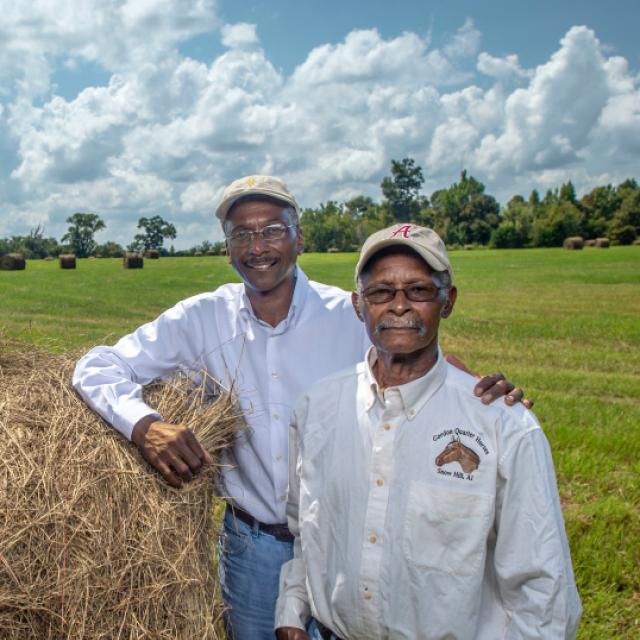
To get started with NRCS, we recommend you stop by your local NRCS field office. We’ll discuss your vision for your land.
NRCS provides landowners with free technical assistance, or advice, for their land. Common technical assistance includes: resource assessment, practice design and resource monitoring. Your conservation planner will help you determine if financial assistance is right for you.
We’ll walk you through the application process. To get started on applying for financial assistance, we’ll work with you:
- To fill out an AD 1026, which ensures a conservation plan is in place before lands with highly erodible soils are farmed. It also ensures that identified wetland areas are protected.
- To meet other eligibility certifications.
Once complete, we’ll work with you on the application, or CPA 1200.
Applications for most programs are accepted on a continuous basis, but they’re considered for funding in different ranking periods. Be sure to ask your local NRCS district conservationist about the deadline for the ranking period to ensure you turn in your application in time.
As part of the application process, we’ll check to see if you are eligible. To do this, you’ll need to bring:
- An official tax ID (Social Security number or an employer ID)
- A property deed or lease agreement to show you have control of the property; and
- A farm number.
If you don’t have a farm number, you can get one from USDA’s Farm Service Agency. Typically, the local FSA office is located in the same building as the local NRCS office. You only need a farm number if you’re interested in financial assistance.
NRCS will take a look at the applications and rank them according to local resource concerns, the amount of conservation benefits the work will provide and the needs of applicants. View Application Ranking Dates by State.
If you’re selected, you can choose whether to sign the contract for the work to be done.
Once you sign the contract, you’ll be provided standards and specifications for completing the practice or practices, and then you will have a specified amount of time to implement. Once the work is implemented and inspected, you’ll be paid the rate of compensation for the work if it meets NRCS standards and specifications.