


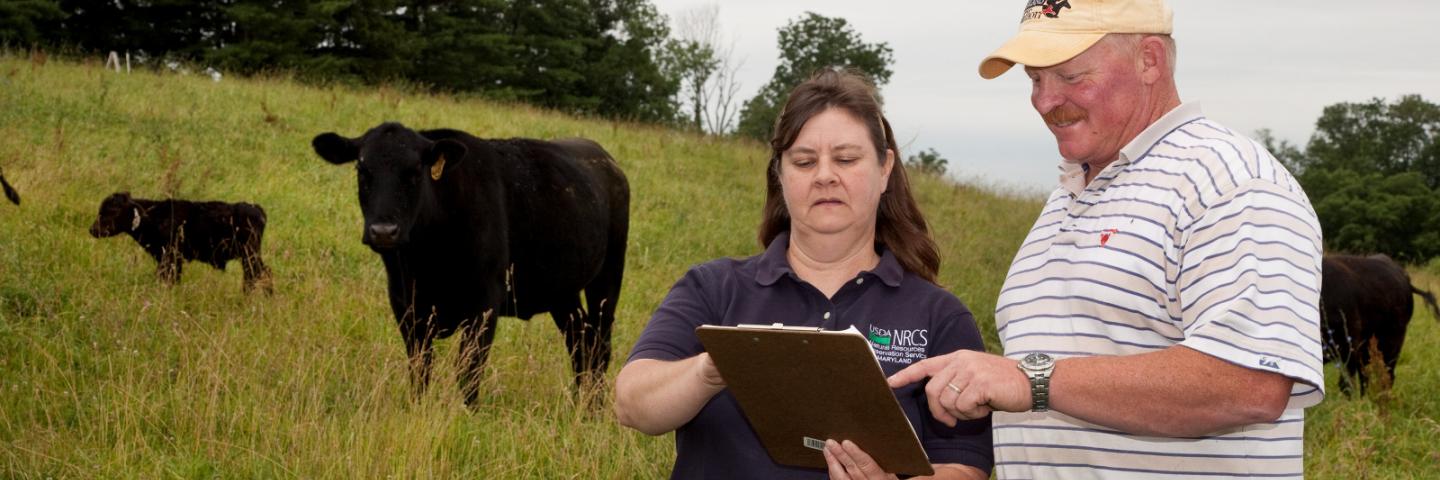
The Environmental Quality Incentives Program (EQIP) provides financial and technical assistance to agricultural and forestry producers to address natural resource concerns and deliver environmental benefits.
How It Works
Through EQIP, NRCS provides agricultural producers and non-industrial forest managers with financial resources and one-on-one help to plan and implement improvements, or what NRCS calls conservation practices. Using these practices can lead to cleaner water and air, healthier soil and better wildlife habitat, all while improving agricultural operations. Through EQIP, you can voluntarily implement conservation practices, and NRCS co-invests in these practices with you.
Benefits
Some of these benefits include:
- Reduction of contamination from agricultural sources, such as animal feeding operations.
- Efficient utilization of nutrients, reducing input costs and reduction in nonpoint source pollution.
- Increased soil health to help mitigate against increasing weather volatility and improved drought resiliency.
Applications
EQIP applications are accepted on a continuous basis, however, NRCS establishes application batching dates for evaluation, ranking and approval of eligible applications. EQIP is open to all eligible agricultural producers and submitted applications may be considered or evaluated in multiple funding pool opportunities. All applications are competitive and are ranked based on national, state and locally identified resource priorities and the overall benefit to the environment.
The fiscal year 2027 EQIP batching deadline is November 13, 2026.
Eligibility
Agricultural producers and owners of non-industrial private forestland and Tribes are eligible to apply for EQIP. Eligible land includes cropland, rangeland, pastureland, and non-industrial private forestland.
Applicants must:
- Control or own eligible land
- Comply with adjusted gross income limitation provisions
- Be in compliance with the highly erodible land and wetland conservation requirements
- Develop an NRCS EQIP plan of operations
Additional restrictions and program requirements may apply.
Participant Responsibilities
Applicants are responsible for completing and filing all application and eligibility paperwork as required. If funded, participants are required to sign a contract and agree to implement the planned conservation practices to NRCS standards and specifications as scheduled.
Assistance For Underserved Groups
Maryland is committed to equitable program access for Socially Disadvantaged, Beginning and Limited Resource Farmers/Ranchers, Military Veteran Farmers individuals and groups. These participants may also receive higher payment rates in addition to being considered in high priority funding pools. Enhancements under the 2018 Farm Bill include increased payment rates and advance payments of up to 50 percent to purchase materials and services needed to implement conservation practices included in their EQIP contract.
National and State Priorities
The following national priorities, consistent with statutory resources concerns that include soil, water, wildlife, air quality, and related natural resource concerns, may be used in EQIP implementation:
- Reductions of nonpoint source pollution, such as nutrients, sediment, pesticides, or excess salinity in impaired watersheds consistent with total maximum daily loads (TMDL) where available; the reduction of surface and groundwater contamination; and the reduction of contamination from agricultural sources, such as animal feeding operations
- Conservation of ground and surface water resources
- Reduction of emissions, such as particulate matter, nitrogen oxides, volatile organic compounds, and ozone precursors and depleters that contribute to air quality impairment violations of National Ambient Air Quality Standards
- Reduction in soil erosion and sedimentation from unacceptable levels on agricultural land
- Promotion of at-risk species habitat conservation including development and improvement of wildlife habitat
- Energy conservation to help save fuel, improve efficiency of water use, maintain production, and protect soil and water resources by more efficiently using fertilizers and pesticides and
- Biological carbon storage and sequestration
In addition, Maryland has identified the following priorities:
- Air Quality Emissions
- Aquatic Habitat
- Concentrated Erosion
- Degraded Plant Condition
- Field Sediment, Nutrient and Pathogen Loss
- Inefficient Energy Use
- Livestock Production Limitation
- Pest Pressure
- Soil Quality Limitations
- Storage and Handling of Pollutants
- Terrestrial Habitat
- Wind and Water Erosion
Decision Making Process for EQIP
Input from Outside Groups, Agencies, and Citizens: The list of eligible practices in Maryland, payment rates and limits, eligible resource concerns, and state scoring criteria are developed based on input and recommendations from the State Technical Committee. The Committee is made up of representatives from various agribusinesses, producer groups, conservation organizations, and federal, state, and tribal government agency representatives.

State Payment Rates
Review the amount and availability of financial assistance for selected conservation practices in Maryland.
Maryland EQIP Contacts
Mikel Williams Hawkins
Farm Bill Specialist
Phone: 443.482.2923
Email: mikel.williams@usda.gov
Sherri DeGraphenreed
Assistant State Conservationist for Programs
Phone: 870-714-1218
Email: sherri.degraphenreed@usda.gov
Ready to get started?
Contact your local service center to start your application.
How to Get Assistance
Do you farm or ranch and want to make improvements to the land that you own or lease?
Natural Resources Conservation Service offers technical and financial assistance to help farmers, ranchers and forest landowners.
To get started with NRCS, we recommend you stop by your local NRCS field office. We’ll discuss your vision for your land.
NRCS provides landowners with free technical assistance, or advice, for their land. Common technical assistance includes: resource assessment, practice design and resource monitoring. Your conservation planner will help you determine if financial assistance is right for you.
We’ll walk you through the application process. To get started on applying for financial assistance, we’ll work with you:
- To fill out an AD 1026, which ensures a conservation plan is in place before lands with highly erodible soils are farmed. It also ensures that identified wetland areas are protected.
- To meet other eligibility certifications.
Once complete, we’ll work with you on the application, or CPA 1200.
Applications for most programs are accepted on a continuous basis, but they’re considered for funding in different ranking periods. Be sure to ask your local NRCS district conservationist about the deadline for the ranking period to ensure you turn in your application in time.
As part of the application process, we’ll check to see if you are eligible. To do this, you’ll need to bring:
- An official tax ID (Social Security number or an employer ID)
- A property deed or lease agreement to show you have control of the property; and
- A farm number.
If you don’t have a farm number, you can get one from USDA’s Farm Service Agency. Typically, the local FSA office is located in the same building as the local NRCS office. You only need a farm number if you’re interested in financial assistance.
NRCS will take a look at the applications and rank them according to local resource concerns, the amount of conservation benefits the work will provide and the needs of applicants. View Application Ranking Dates by State.
If you’re selected, you can choose whether to sign the contract for the work to be done.
Once you sign the contract, you’ll be provided standards and specifications for completing the practice or practices, and then you will have a specified amount of time to implement. Once the work is implemented and inspected, you’ll be paid the rate of compensation for the work if it meets NRCS standards and specifications.